
True N+1 Compression
Home / True N+1 Compression
N+1 is a capacity standard, not an equipment count — here’s how to tell the difference.
N+1 Is a Capacity Standard — Not an Equipment Count
A system does not become N+1 simply because it has two or more compressors. True N+1 must be calculated against a clearly defined operating duty, including: required gas volume, actual suction pressure, required discharge pressure, gas composition and molecular weight, inlet temperature, ambient temperature and elevation, expected liquid loading, normal equipment degradation, maximum production demand, and the loss of the largest required compressor.
The defining question: with any one compressor unavailable, can the remaining system continue compressing the required gas volume at the required suction and discharge conditions? When the answer is yes — and the supporting equipment can also remain operational — the system may legitimately be described as N+1. When the answer is no, the installation contains extra equipment, but it does not provide true N+1 redundancy.
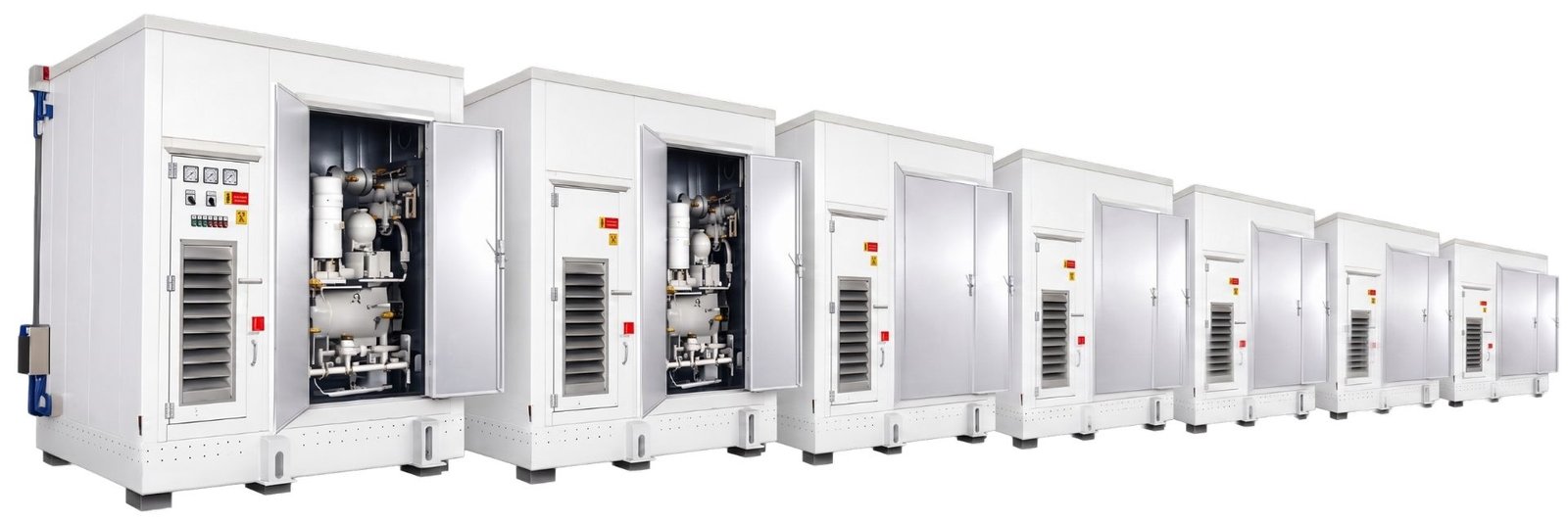
In compression, uptime is not determined by how many compressor packages are installed. It is determined by how much usable compression capacity remains when one package — or another critical component — is unavailable. That is the purpose of a properly engineered N+1 compression system.
“N” represents the minimum number of compressors required to satisfy the defined operating demand. The “+1” is an additional compressor capable of replacing the capacity of any one required unit without interrupting production or materially reducing system performance. Merely installing additional equipment does not automatically create a redundant system. True N+1 must be proven at the actual operating duty and must extend beyond the compressor element to the complete compression system.

A Simple N+1 Example
Assume a facility must compress 900 MSCFD under its specified operating conditions. If each compressor can reliably process 450 MSCFD at those conditions, two compressors are required to support the load:
| Configuration | Equipment Status | Capacity Result |
|---|---|---|
| N | Two operating compressors | 900 MSCFD total required capacity |
| +1 | One additional available compressor | Replaces either required unit |
| Installed | Three compressors | Any two can carry the full load |
If any one compressor is removed from service, the remaining two can continue processing the full 900 MSCFD requirement. That is true N+1 capacity.
Now assume the same three compressors are advertised at 450 MSCFD each, but their actual capacity at the site conditions is only 350 MSCFD. With one unit unavailable, the remaining two provide only 700 MSCFD. Despite having three compressors, the installation is not true N+1.
What True N+1 Requires
- Verified capacity at actual conditions. Not catalog ratings, motor horsepower, theoretical displacement, or performance at favorable conditions. A compressor rated for the required volume at 20 psig suction may not provide the same capacity at 2 psig suction, and elevation changes performance too.
- The remaining compressors carry the entire required load. A system that loses 20, 30, or 50 percent of production when one compressor fails offers partial backup or reduced-rate operation — not full N+1.
- The spare compressor is ready to operate. Mechanically complete, connected, commissioned, maintained, and available. A disconnected compressor sitting elsewhere in the field is inventory, not N+1 redundancy.
- Automatic or rapidly executable load transfer. Controls that recognize changing demand, start or load the required compressor, and balance capacity among available machines — not hours of manual valve changes or control reprogramming.
- Isolation without a system shutdown. Each compressor needs the piping, isolation valves, check valves, bypasses, and controls to be removed from service without shutting down the remaining compression system.
- Redundancy that extends beyond the compressor. True system-level N+1 must consider common points of failure: a shared electrical transformer or motor-control center, a single PLC or master control panel, a common emergency shutdown circuit, a single inlet separator or scrubber, a shared cooling system, a single fuel-gas supply, a common suction or discharge valve. A spare compressor doesn’t protect production when one non-redundant auxiliary component can disable every compressor.

False N+1: Systems That Are Not Genuine Redundancy
- Two 50 percent compressors. Both must operate to satisfy the required load — that’s an N configuration, not N+1. To create N+1 with 50 percent machines, three compressors are required, provided any two can carry the full defined load.
- Nameplate N+1. Adding manufacturers’ advertised capacities and comparing the total to average production doesn’t establish N+1. Installed horsepower is not the same as usable compression capacity.
- Average-day N+1. A system may appear redundant against average flow but fail during peak production, high ambient temperature, lower suction pressure, or increased discharge pressure. True N+1 should be tested against the agreed design case — not the easiest operating day of the year.
- Partial-capacity backup presented as full N+1. A smaller compressor may provide useful emergency service, but it isn’t a complete N+1 spare if it can’t replace the capacity of the largest required operating unit.
- A spare sharing a single point of failure. Two compressors connected to one undersized separator, one electrical feed, or one critical valve may look redundant on a plot plan but remain dependent on the same vulnerable component.
- Cold standby that can’t start immediately. Unless its readiness is regularly tested, the operator doesn’t know whether an idle, isolated, or disconnected unit will start, load, and perform when the operating compressor fails.
- Redundancy that disappears during maintenance. If the spare is routinely used to satisfy normal demand, or one compressor is undergoing planned overhaul with no additional reserve, the facility is operating at N, not N+1.
The Role of Controls and Turndown
A well-designed N+1 system must do more than start an additional compressor — it must coordinate the operating machines so they share load efficiently and maintain stable suction and discharge conditions. Poorly coordinated compressors can fight one another, cycle excessively, or consume substantial power without performing useful compression. A central control strategy should establish which compressor is the lead unit, which provide additional capacity, and which remains available as the redundant asset, with lead positions rotated to balance running hours and maintenance requirements.
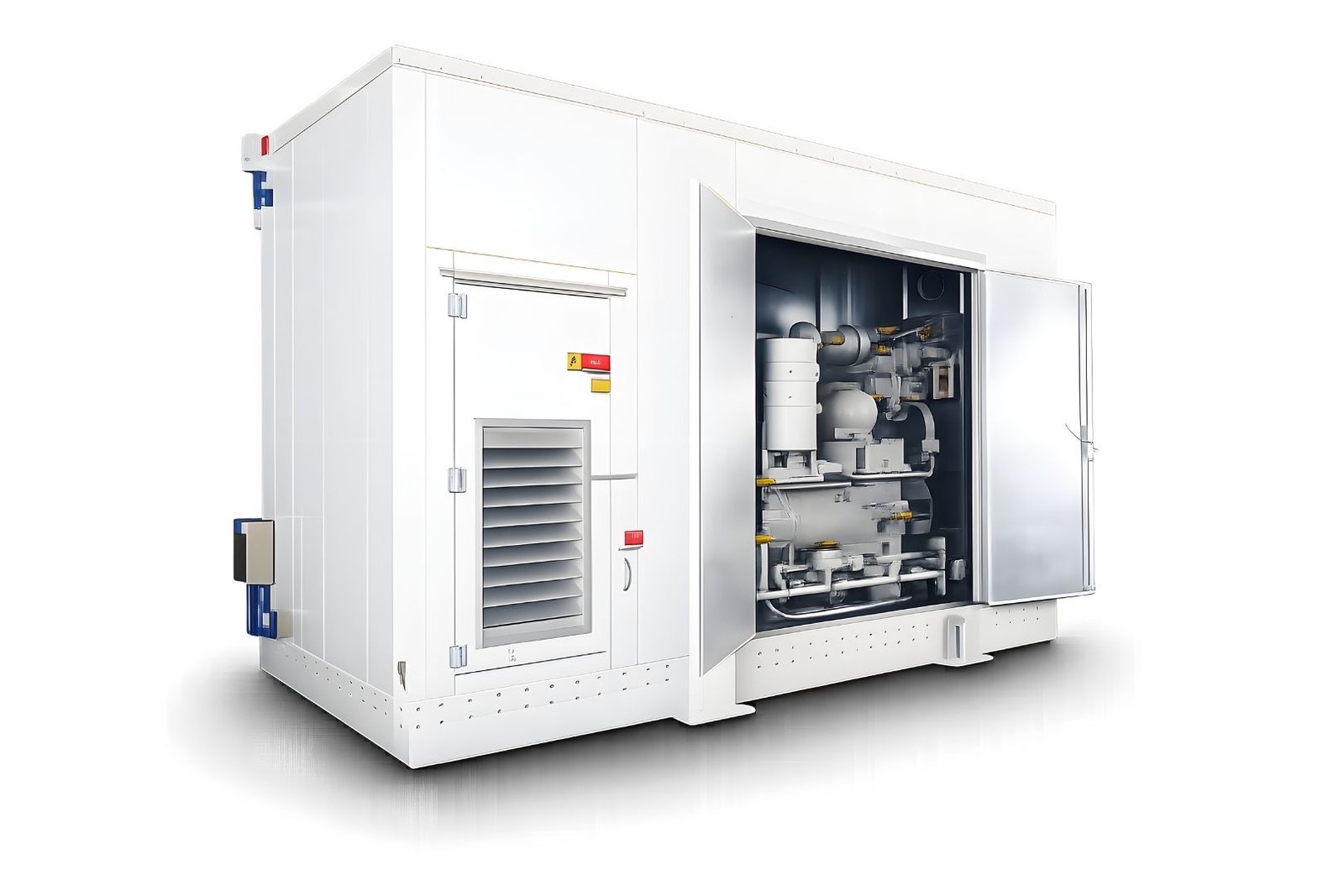
Vilter Flexibility in an N+1 System
The Vilter single-screw compressors used in the Reliable VRU fleet provide an important advantage in multiple-compressor installations: the ability to independently adjust compressor capacity and internal volume ratio through the proprietary Parallex Slide System. The capacity slide adjusts the volume of gas being compressed, while the volume-ratio slide adapts the compressor to changing pressure conditions — allowing the operating compressors to respond as production demand changes or as another unit is taken out of service.
The Parallex system does not, by itself, establish N+1 redundancy. The total installation must still have sufficient verified capacity, properly designed piping, suitable controls, independent auxiliaries, and an available additional compressor. But the broad operating range and mechanical capacity control of the Vilter platform can make it particularly well suited for an engineered N+1 arrangement.
The Reliable VRU Approach
Reliable VRU treats N+1 as a measurable production-availability commitment, not a marketing label. Our approach begins by establishing the actual compression requirement at the specified operating conditions, then determines the minimum number of compressors required to support that duty, and adds sufficient independently available capacity to maintain production following the loss of any one required compressor. The design considers the entire compression system: compressor capacity, suction and discharge piping, separation and liquid handling, electrical supply and drivers, cooling and lubrication, instrumentation and controls, isolation and bypass arrangements, maintenance access, automatic staging and load sharing, and common-mode failure risks.
The True N+1 Test: If the largest required compressor becomes unavailable today, can the remaining system continue handling the full specified gas volume at the required suction and discharge conditions — without temporary equipment, emergency modifications, or production curtailment? If yes, the system may be the real deal. If it depends on favorable weather, reduced production, theoretical ratings, shared equipment that can’t be isolated, or a spare that isn’t ready to run, it’s only redundancy on paper.
Further Reading / Sources:
- Uptime Institute — redundancy and maintainability concepts
- U.S. Department of Energy, Improving Compressed Air System Performance — compressor sequencing, controls, and system efficiency
- Copeland / Vilter product literature — Vilter single-screw compressors and the Parallex Slide System
- Ariel Corporation technical literature — compressor package components and supporting systems
nt.