Vilter Compression Heritage
Home /Vilter Compression Heritage
A proven industrial platform, re-engineered for modern production.
The Vilter Legacy
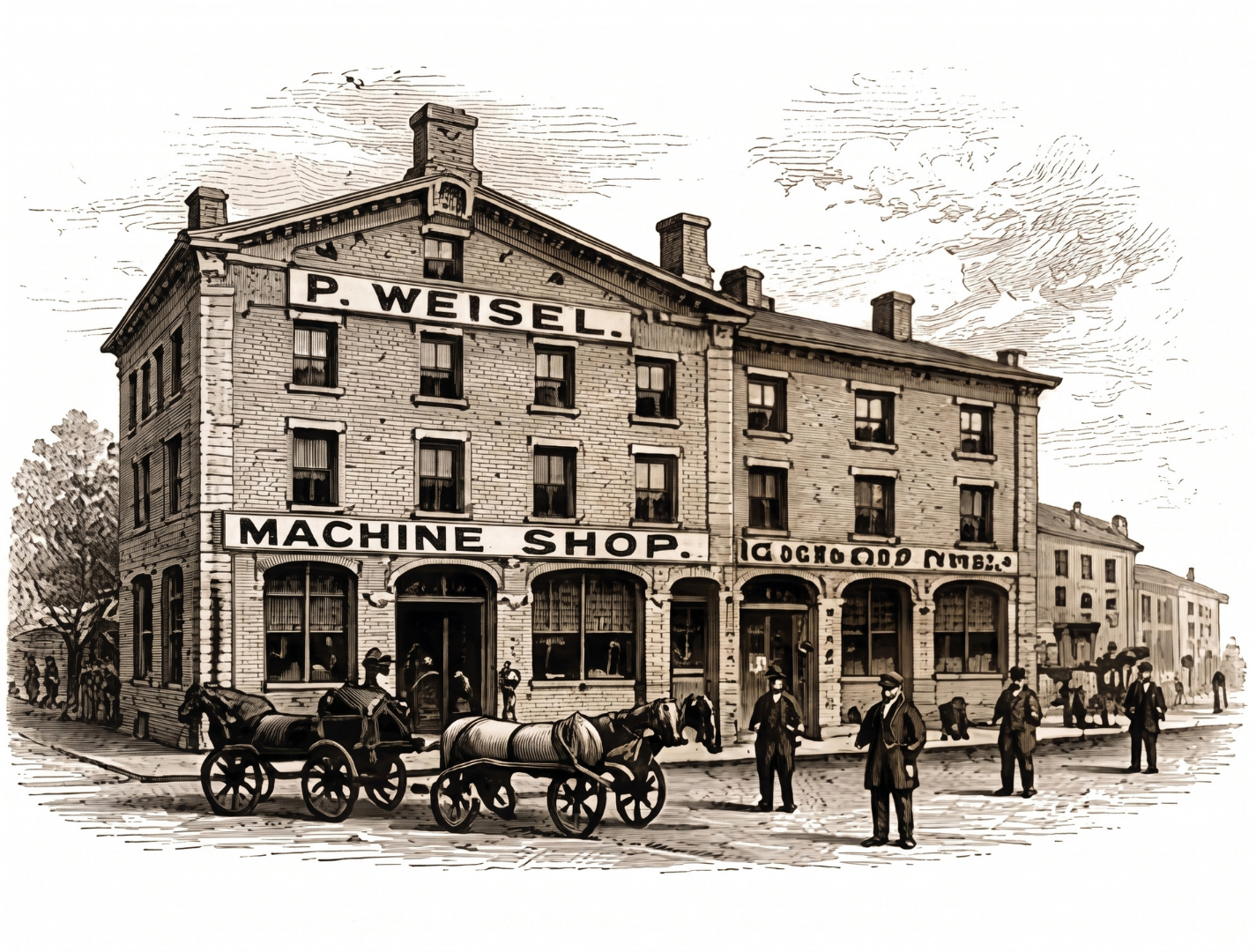
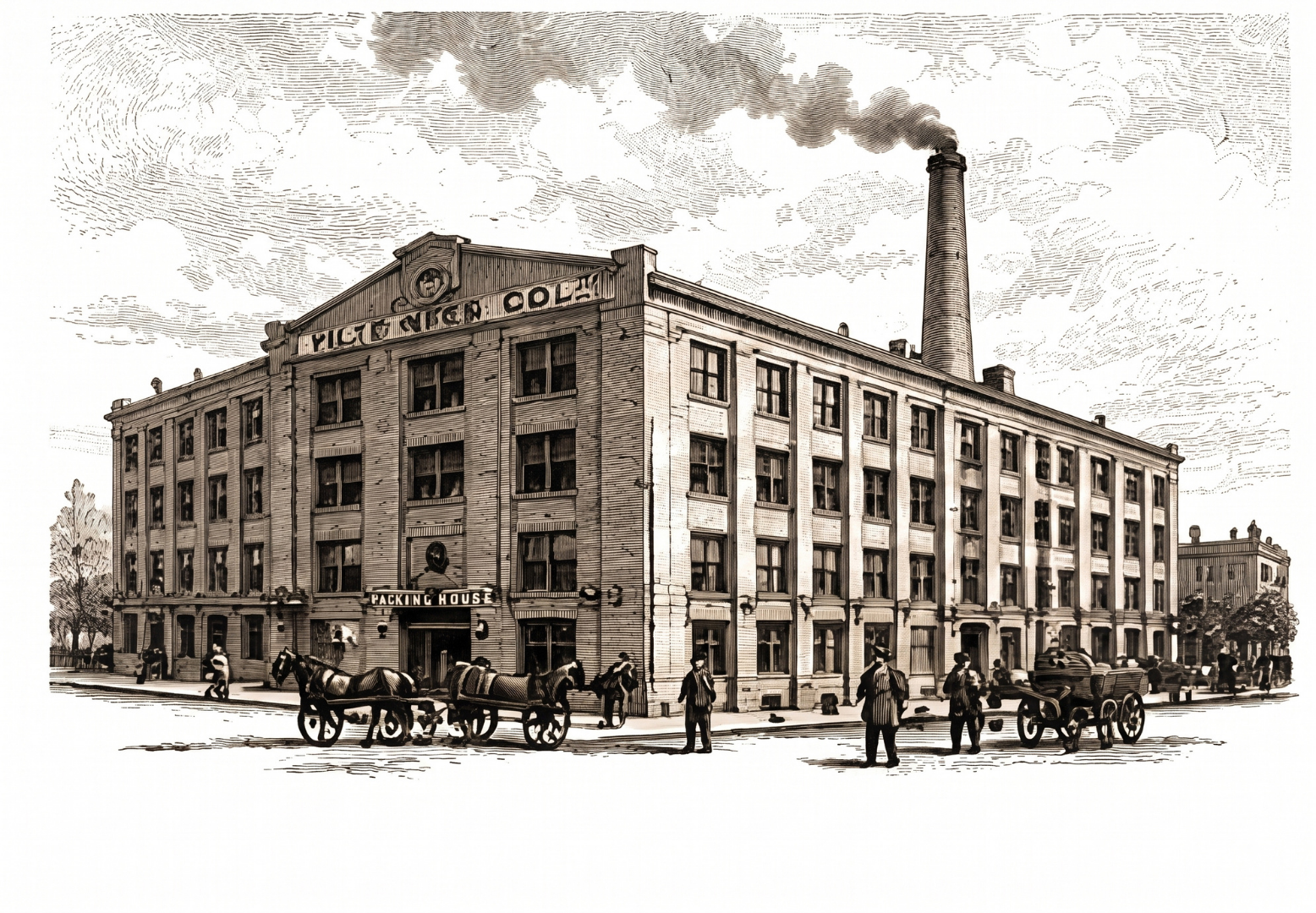
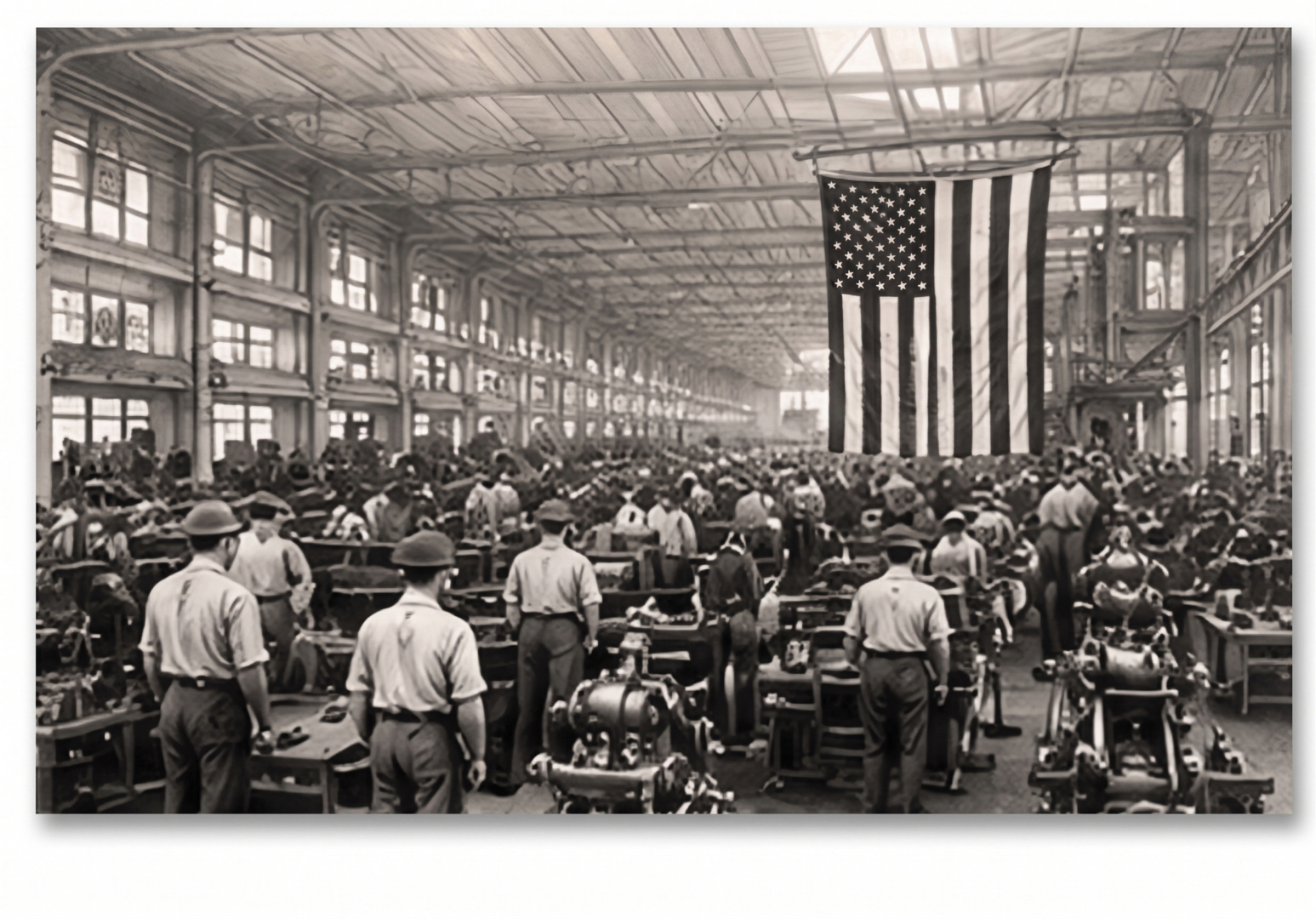
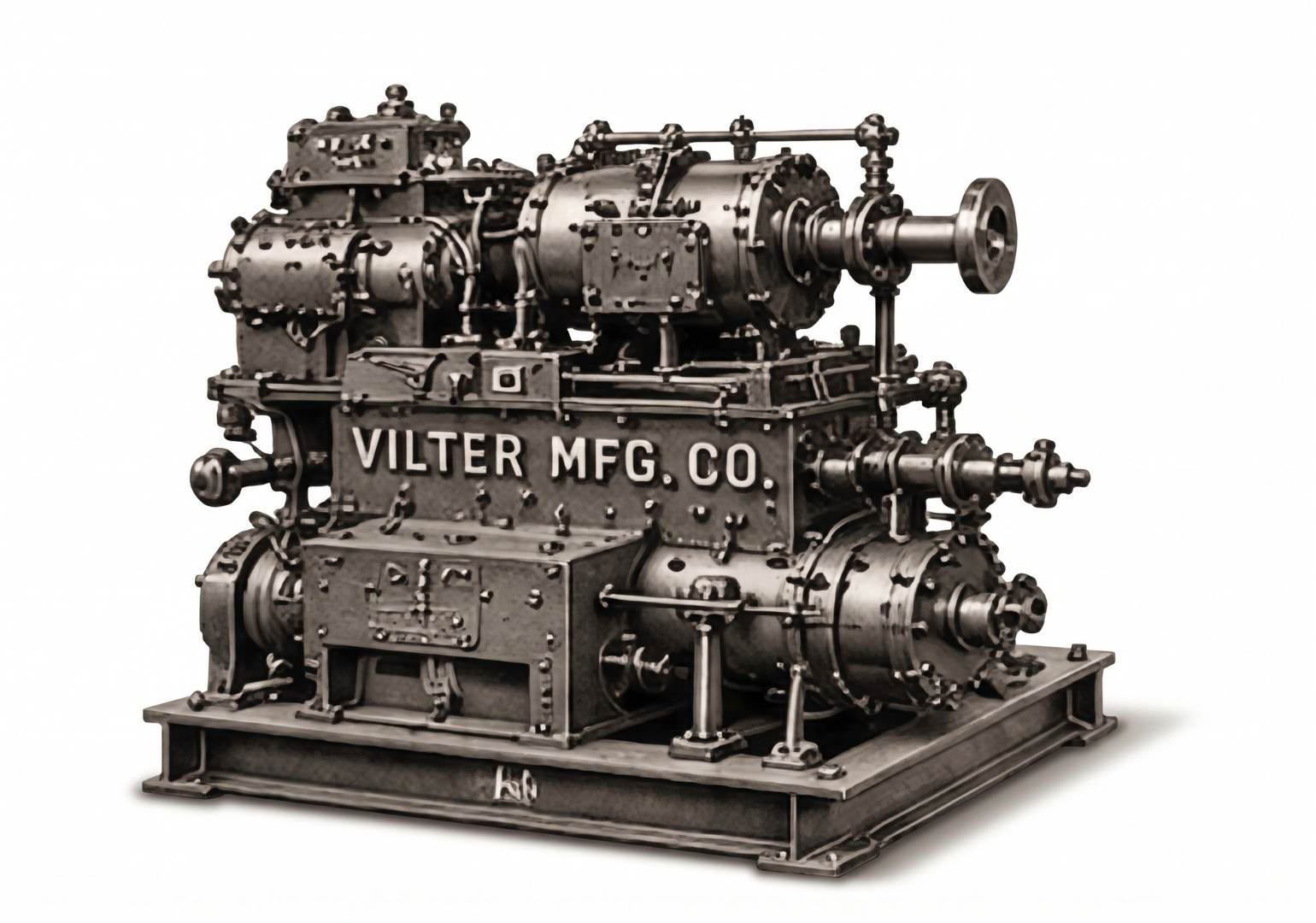
Vilter’s history began in Milwaukee in 1867, when Peter Weisel opened a general-purpose machinery shop. Ernest Vilter joined the business in 1880, and the company introduced its first refrigeration compressor in 1882. Following a major fire in 1892, Vilter rebuilt on a larger scale and became an important supplier of industrial refrigeration equipment to ice plants, breweries, food processors, and packing houses. In 1945, the company introduced the Vilter 440 reciprocating compressor, a design that became an enduring industrial standard.
Over time, Vilter expanded beyond traditional refrigeration into industrial gas compression, oil and gas applications, renewable natural gas, carbon dioxide compression, and other demanding process applications.
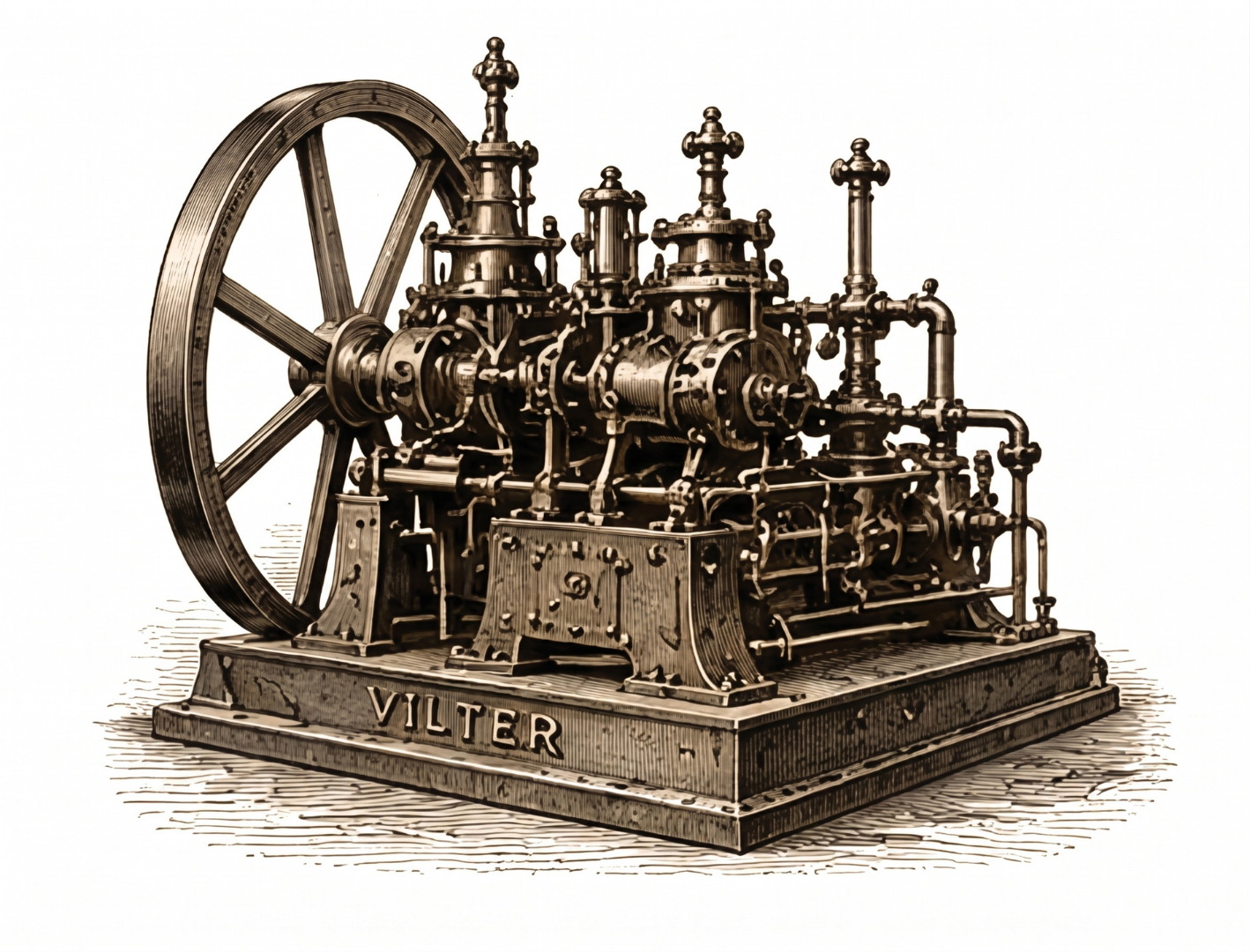
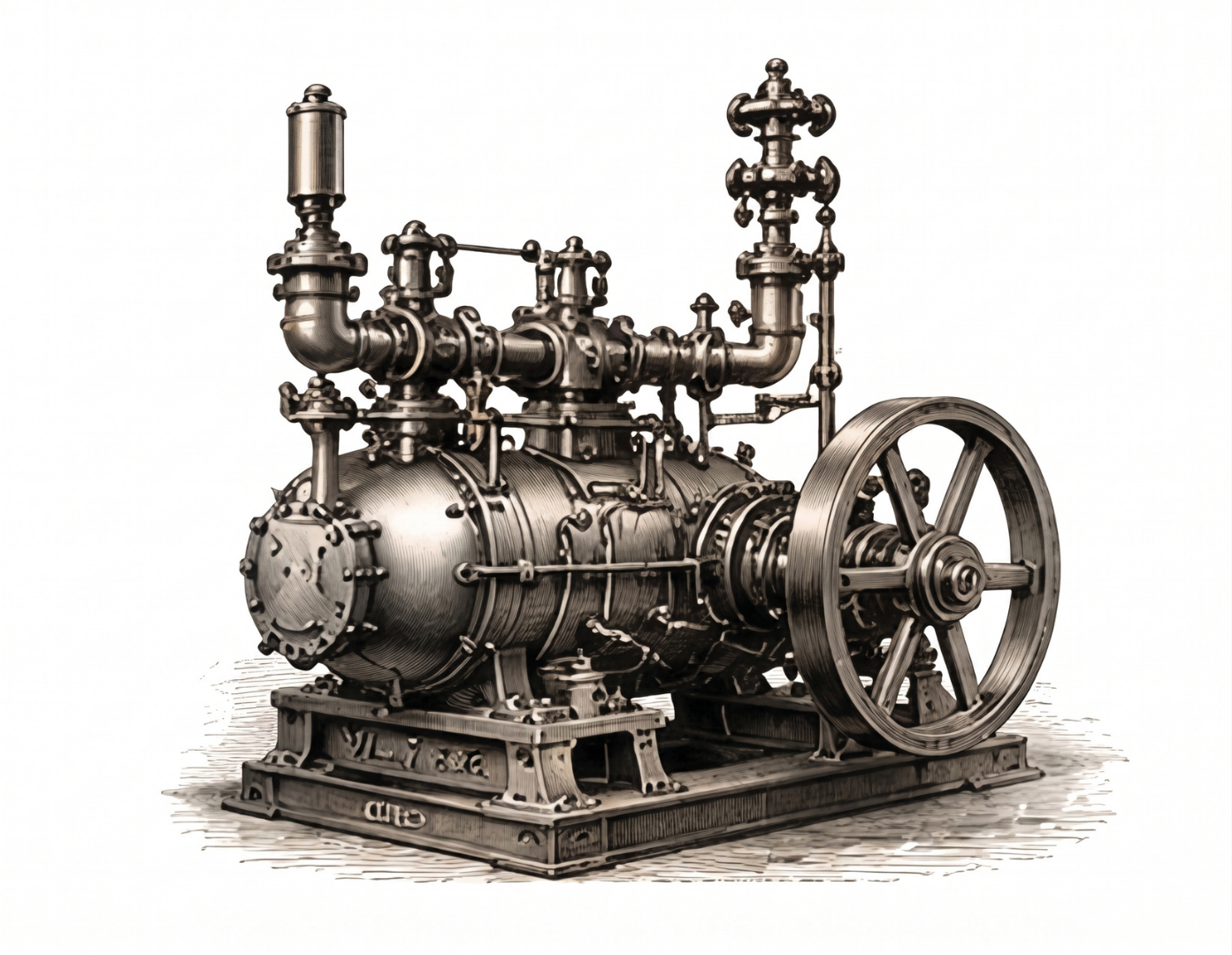
Reliable VRU’s compressor fleet is built upon one of the longest and most respected engineering legacies in industrial compression: Vilter™ single-screw compressor technology and the proprietary Parallex™ Slide System. From the earliest development of mechanical refrigeration compressors to today’s advanced gas-recovery and production-optimization applications, Vilter technology has demonstrated the durability, adaptability, and operating flexibility required for demanding continuous-duty service.
Vilter Becomes Part of Emerson
In 1986, Emerson Electric acquired Copeland, bringing one of the refrigeration industry’s best-known compressor brands into the Emerson organization. Copeland had been founded by inventor Edmund Copeland in 1921.
Emerson Climate Technologies acquired Vilter Manufacturing in 2009. At the time of the acquisition, Vilter manufactured reciprocating and single-screw compressors for industrial refrigeration and gas-compression applications, and it subsequently became part of Emerson Climate Technologies’ refrigeration and industrial-compression portfolio. The Emerson era gave Vilter access to a larger international engineering, manufacturing, controls, distribution, and service organization while preserving the Vilter name and its specialized industrial-compression technology. Many of the compressor packages in the Reliable VRU fleet were manufactured during this period and therefore carry the Emerson Vilter name.
The Return of Copeland as a Standalone Company
In October 2022, Emerson announced an agreement to sell a majority interest in its Climate Technologies business to private-equity funds managed by Blackstone. The transaction closed on May 31, 2023, at a stated enterprise value of $14 billion. The newly independent company adopted the Copeland name, returning a century-old compressor brand to the market as a standalone business. Vilter became part of this organization and is now represented as Vilter by Copeland.
Emerson initially retained a 40 percent non-controlling interest in Copeland. In August 2024, Emerson completed the sale of its remaining equity interest to funds managed by Blackstone, completing Emerson’s separation from the Copeland business. The corporate names have changed, but the underlying Vilter engineering heritage continues.
The Vilter Single-Screw Advantage
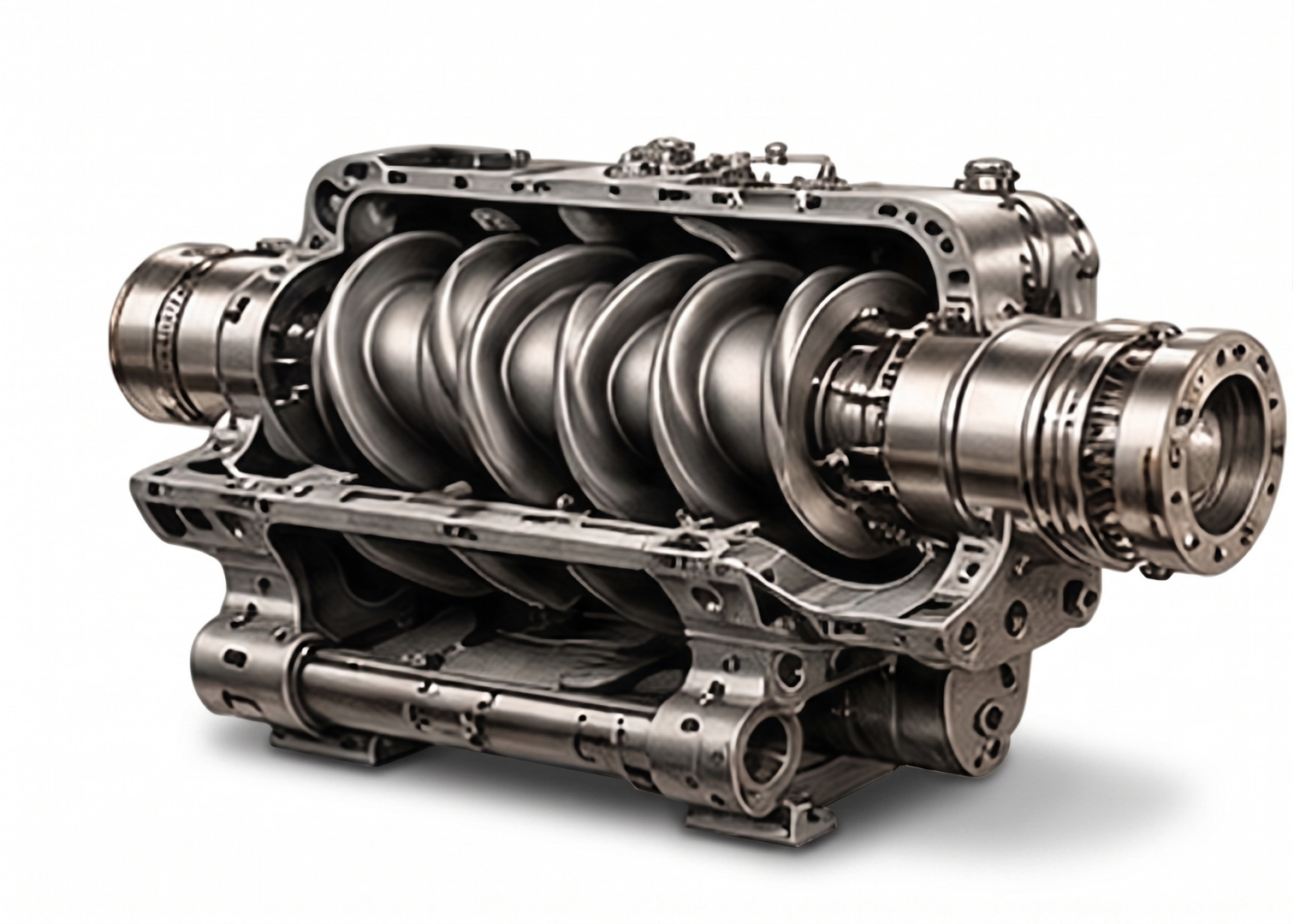
At the center of the Reliable VRU fleet is the Vilter single-screw compressor. Unlike a conventional twin-screw compressor, the Vilter design uses a central main screw operating with opposing gate rotors. Compression occurs on opposite sides of the main screw, helping balance radial and axial forces and reduce bearing loads, vibration, and mechanical stress. This balanced architecture was developed for applications requiring reliability, continuous operation, and long equipment life.
The Vilter single-screw compressor is particularly valuable when operating conditions are not constant. Oil and gas wells rarely maintain the same inlet pressure, gas volume, gas composition, or compression ratio throughout their productive lives, and a compressor designed for only one operating point may become inefficient or unsuitable as those conditions change. Vilter technology was designed to adapt.
The Parallex™ Slide System
A defining feature of the Vilter single-screw compressor is its exclusive Parallex™ Slide System. The system uses independently controlled capacity and volume-ratio slides. The capacity slide can regulate gas flow from approximately 10 percent to 100 percent of rated capacity. The volume-ratio slide can adjust the internal volume ratio from approximately 1.2 to 7.0. Because the two functions operate independently, the compressor can adjust both the quantity of gas being compressed and the internal compression ratio required by the application — responding as suction pressure, discharge pressure, and gas volume change.
The Parallex system helps reduce the inefficiency associated with over-compression and under-compression while providing precise control across a broad operating range. For production operations, this flexibility is especially important: a vapor-recovery or gas-compression system must respond to changing tank pressure, well performance, ambient conditions, and process demand without repeatedly replacing the compressor package.
PARALLEX™: Independent capacity and volume-ratio control gives the compressor a broad operating envelope as field conditions change.
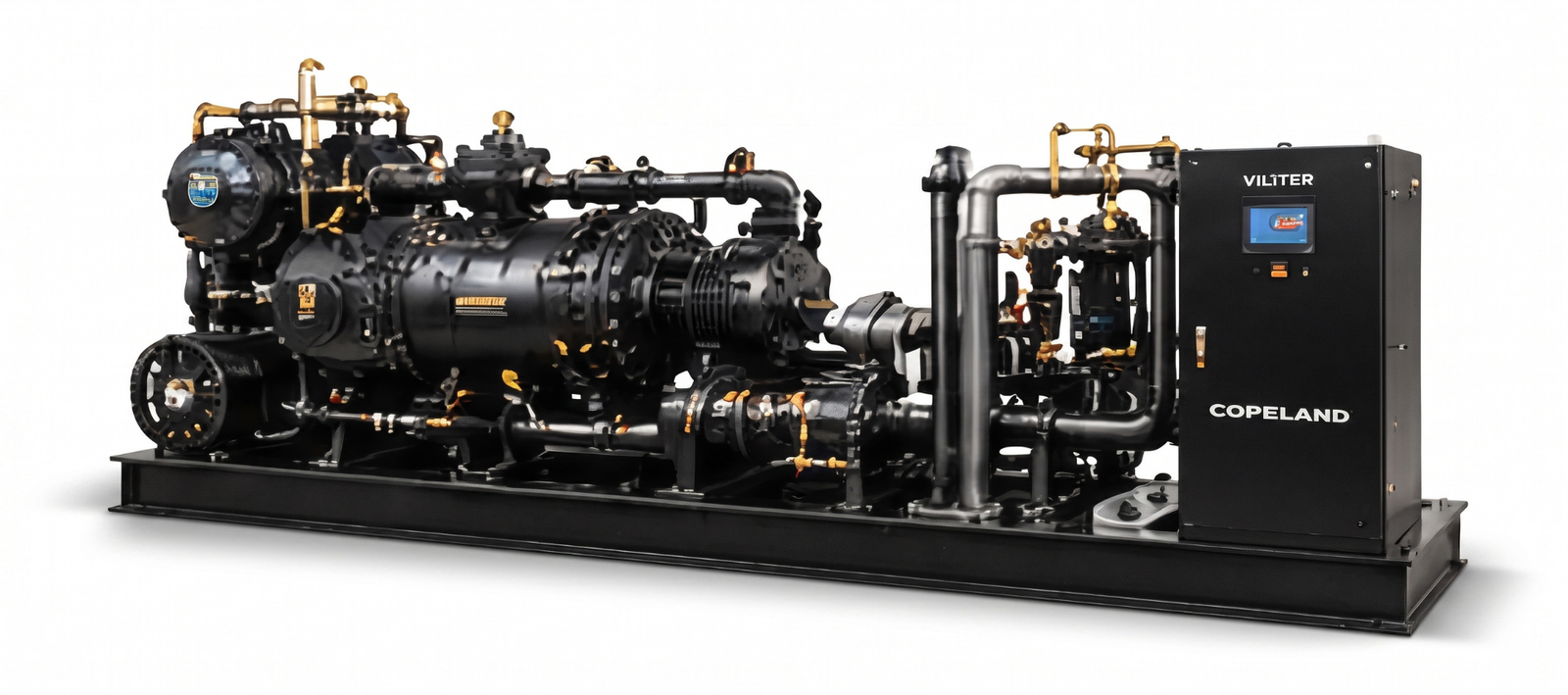
Proven Equipment, Engineered for Vapor Recovery
Reliable VRU is not attempting to invent an unproven compressor. Our platform begins with an established fleet of industrial Vilter single-screw compressor packages manufactured under Emerson ownership and incorporating Vilter’s proprietary Parallex technology. Reliable VRU applies its production, vapor-recovery, controls, and gas-handling expertise to reconfigure these durable industrial assets for modern oilfield applications, including production optimization, vapor recovery, methane capture and abatement, low-pressure gas gathering, tank-battery pressure management, wet-gas compression, and carbon dioxide and process-gas applications.
Rather than forcing an operator to select separate fixed-duty machines for every phase of a well’s life, the Vilter and Parallex platform provides a flexible mechanical foundation that can be engineered around changing production conditions.
The result is not simply a fleet of used compressors. It is a proven industrial-compression platform re-engineered to recover more gas, reduce emissions, maintain production, and create value throughout the life of the reservoir.